


Recently, reports have indicated that State Grid Electric Power has released the 2026 Embodied Intelligence Development Plan, planning to centrally procure approximately 8,500 various embodied intelligence devices this year, with a total investment of approximately RMB 6.8 billion. Among them, humanoid robots for live-line operations are the highest-priced category, with 500 units to be procured and a budget of RMB 2.5 billion. Shenmo Technology's humanoid robot won the bid last September for the Intelligent Live-Line Inspection Robot System for Power Equipment project of State Grid Hebei Electric Power Energy Technology Co., Ltd. Currently, the industry's first humanoid robot specially customized for intelligent live-line operations in medium- and high-voltage substations and distribution rooms in the power sector, named “Fu'an,” is about to be delivered to State Grid Electric Power.
Relying on 6D dynamic vision and force-position hybrid control technology, multimodal sensing and cross-modal data AI large-model fusion technology, piezoelectric six-dimensional force sensors, and lightweight dexterous hands resistant to strong electromagnetic interference, Shenmo Technology won the State Grid Electric Power bid. It has become the industry's first humanoid robot company capable of meeting the demanding requirements of intelligent live-line inspection of power equipment in harsh environments and delivering higher-value application scenarios. The company is developing for State Grid Electric Power a complete humanoid robot system for intelligent live-line operations named “Fu'an,” together with related core components.
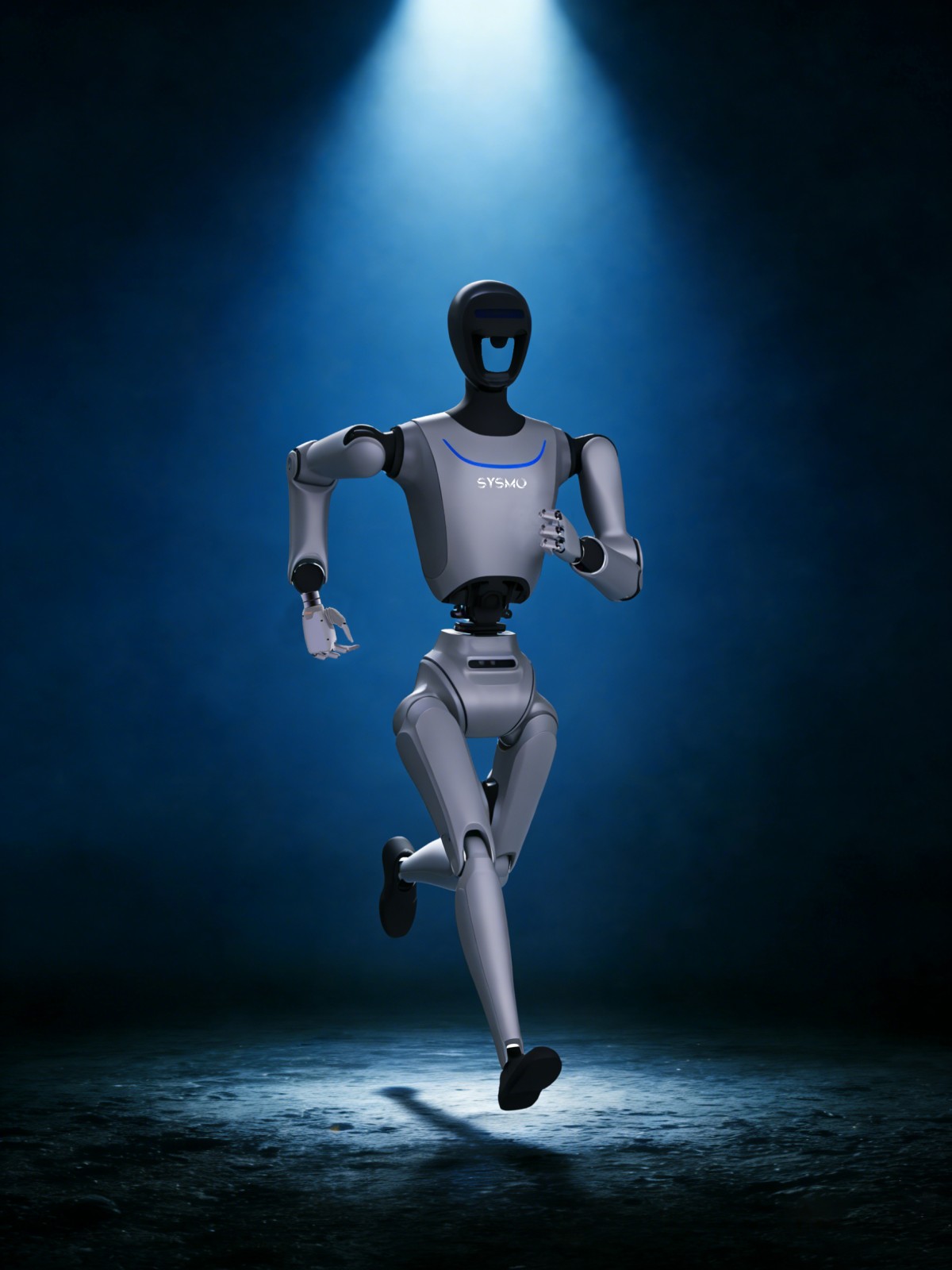
The project aims to improve the efficiency and safety of power equipment operation and maintenance, promote the digital and intelligent transformation and upgrading of the industry, and reduce the need for personnel to enter high-risk areas. It requires long-duration, continuous live-line operations and strong terrain adaptability. By using humanoid robots to overcome the limited coverage of humans and traditional robots, the project seeks to achieve full coverage of intelligent live-line inspection.
The project challenges include: developing a robotic arm for multimodal-data-based inspection and a dexterous-hand device resistant to strong electromagnetic interference; developing precise inspection-point positioning technology based on the coupling of pose and force sensors; and establishing a real-time data analysis, defect diagnosis, and fault prediction and control platform based on large models and multimodal fusion.
To address these technical challenges, Shenmo's upcoming industry-first intelligent live-line operation humanoid robot “Fu'an” features the following technical and product advantages specifically designed for intelligent live-line inspection scenarios:
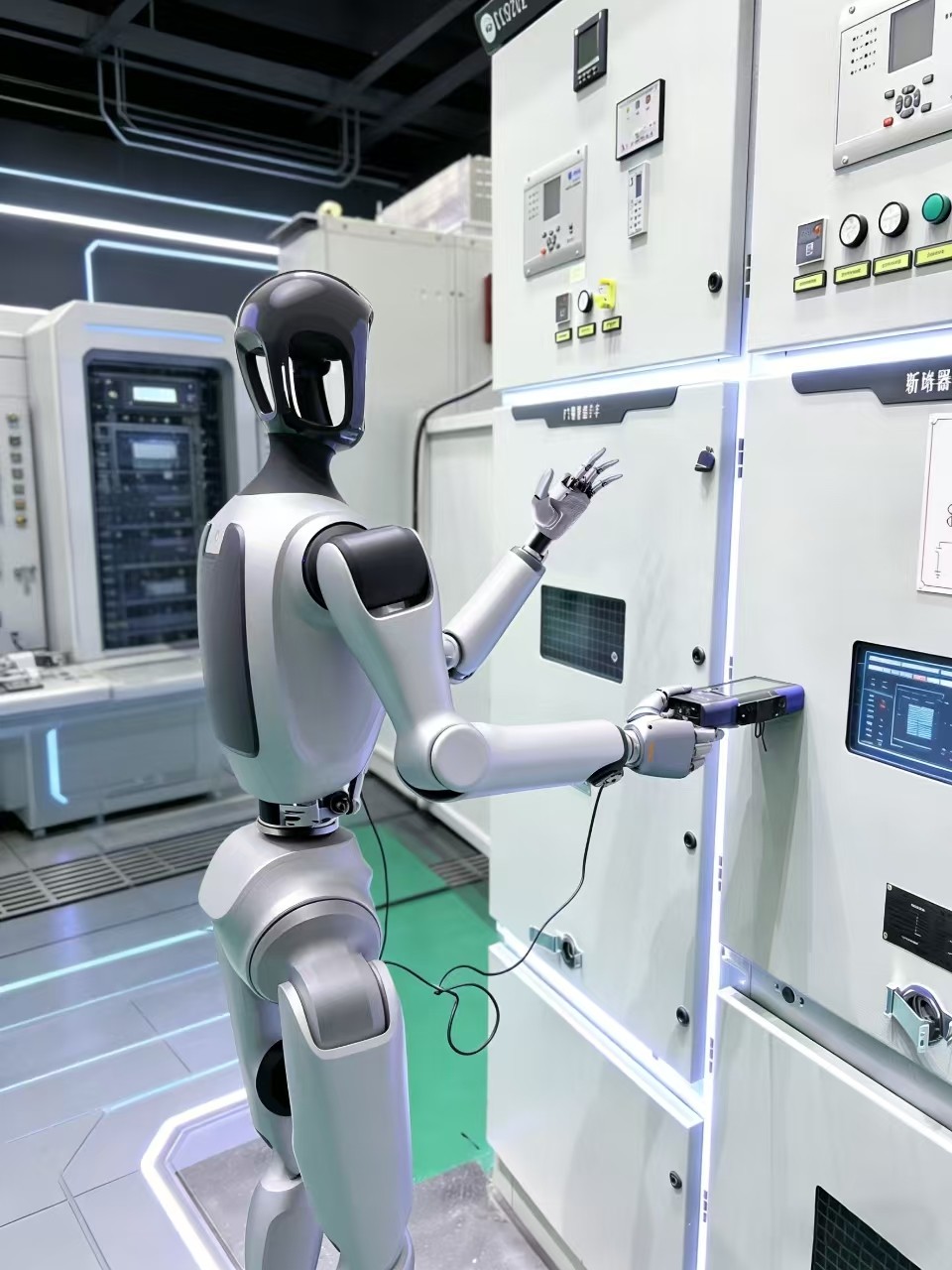
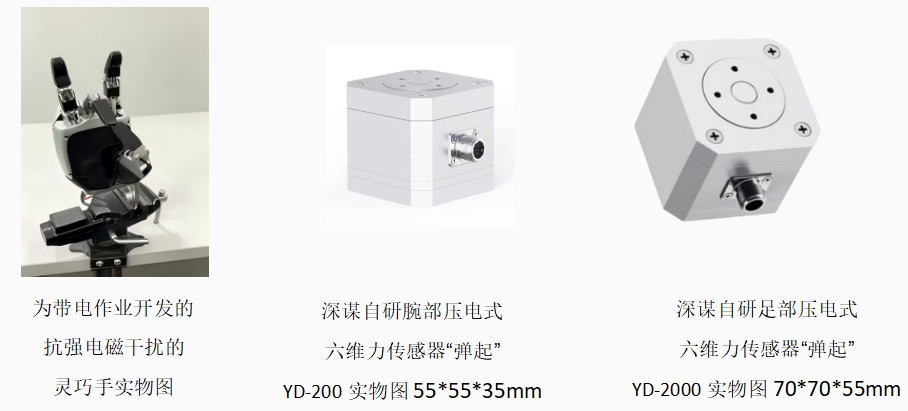
① Professional end effector for power live-line inspection: lightweight dexterous-hand design resistant to strong electromagnetic interference and modular tool compatibility, enabling precise sensor grasping and reliable attachment to inspection points.
② High-precision dynamic force-position hybrid control system: In complex environments, it provides real-time collision-free trajectory planning for multi-degree-of-freedom robotic arms and high-precision force-position hybrid control. Through highly dynamic real-time feedback from six-dimensional force sensing, the force-position hybrid control ensures force-control accuracy while also maintaining positional accuracy. A scheduling mechanism optimized using extensive coordinated-operation data will be repeatedly tested in actual substation environments to ensure the robustness and safety of trajectory planning.
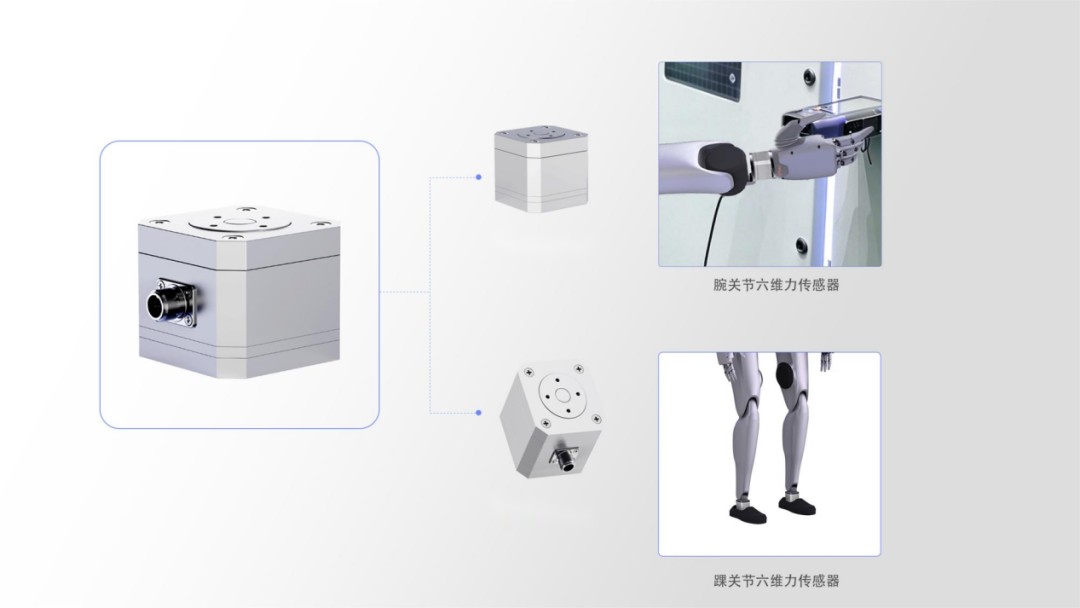
③ Highly robust adaptive multimodal data acquisition, fusion, and positioning algorithm: It overcomes various uncertainties, including robot pose deviations, sensor connection offsets, and disturbances caused by equipment surface curvature. By fusing multimodal data, it establishes a general-purpose positioning system for efficient fusion and real-time computation of high-dimensional data. Adaptive algorithms accommodate complex operating scenarios, while a multimodal operation database is established to improve algorithm robustness, achieving closed-loop operation throughout the entire process from positioning to data acquisition.
④ Cross-modal perception technology and real-time fault-risk early-warning mechanism based on the attention mechanism of an AI large model: AI large models are used to train and process historical fault data across devices and operating conditions, and to build a multi-physical-field coupled fault knowledge graph, overcoming data heterogeneity and the shortage of rare fault samples. A collaborative attention Co-Attention mechanism is introduced to fuse multimodal data and optimize cross-modal correlation while strictly controlling computation time. A dynamic prediction model generates probabilistic fault-risk warnings in real time and incorporates power-system model constraints to ensure prediction accuracy and real-time performance. RL reinforcement learning algorithms are used to optimize large-model training and real-time defect diagnosis and fault prediction through multimodal data fusion.
⑤ Highly safe robot operation-control and protection strategies for complex environments: The system enables traversal of complex terrain, panoramic perception, and intelligent obstacle avoidance. The emergency-stop response time is ≤0.1 seconds. Equipment self-inspection covers modules including the battery, network, and sensors, and complies with the IP67 protection rating. It supports automatic opening and closing of door closers and seamless integration with switchgear doors and rodent barriers.
Shenmo Technology has repeatedly expressed its views at events such as the World Artificial Intelligence Conference, arguing that humanoid robots should move beyond the vicious cycle of “running and jumping just for show.” Rather than investing substantial resources in perfecting a form that is not particularly innovative—“humanoid robots have been keen on performing in fixed, structured scenarios ever since their birth in 1973”—humanoid robots should begin with multimodal physical-quantity perception of different dynamic environments, integrate rapidly advancing artificial intelligence technologies for autonomous decision-making and control, and combine with high-value vertical industries such as power and energy and petrochemicals that have extremely demanding scenario requirements. Only by truly meeting essential industry needs and creating value for humanity can this wave of humanoid robots and embodied intelligence be distinguished from the previous humanoid-robot booms from the 1980s to the beginning of this century, and can the industry realize its expectations for a trillion-yuan-scale market driven by the embodied intelligence boom.
These views are receiving increasing attention. Since the beginning of this year, the China Central Television documentary Smart Manufacturing for a Strong Nation has featured Shenmo in a special report titled “The Mission of Robots That Step Off the Stage.” Xinhua Net conducted an exclusive interview with Zheng Ruping, co-founder of Shenmo Technology, under the title “Driving Innovation and Development in Embodied Intelligence with Hardcore Technologies and Real-World Scenarios.” Xinhua News Agency introduced Shenmo in a report titled “New Quality Productive Forces, Smart Manufacturing for a Strong Nation | Shenmo Technology: Giving Robots a Practical Mission through Intelligent Perception Technology.”
The CCTV documentary Smart Manufacturing for a Strong Nation described Shenmo Technology's mission for robots as follows: “In those corners that humans are unwilling, unable, or even afraid to enter, what we truly need is a partner capable of opening doors and moving forward, using precise perception to make judgments and reliable decisions to take action.” The power live-line operation scenario undoubtedly aligns closely with this mission for robots.
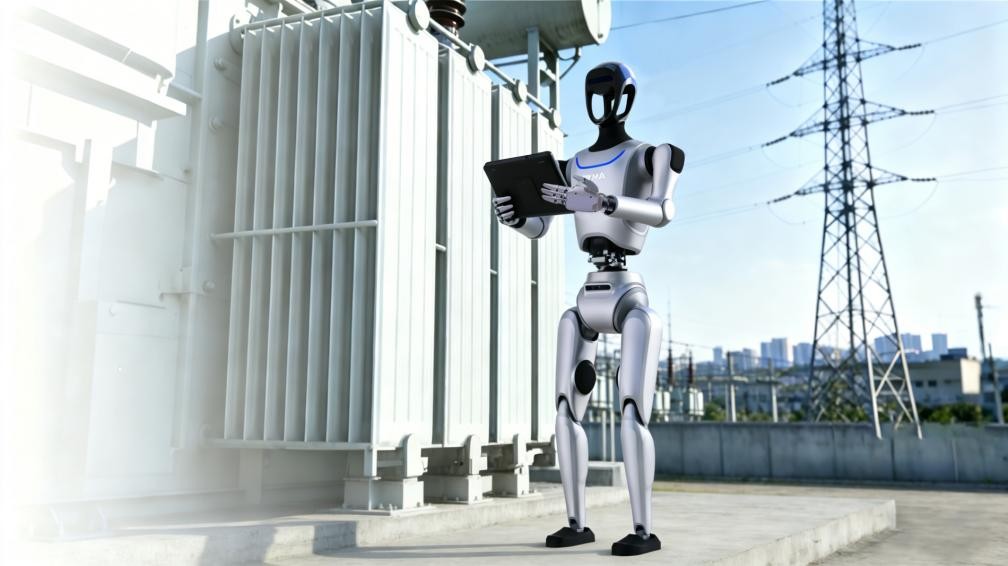
From being the first to propose the development of a “general embodied-intelligence world model capable of extracting causal and physical relationships across time dimensions” the year before last, to pioneering the brain-computer interaction system MindMover integrated with humanoid robots on the eve of last year's WAIC (World Artificial Intelligence Conference), followed by the release of the Opinions on Promoting the Innovative Development of the Brain-Computer Interface Industry by seven government departments including the Ministry of Industry and Information Technology, and then the humanoid robot's successful bid for State Grid Electric Power last year, Shenmo Technology anticipated the demand for high-value scenarios such as live-line operations in the power industry earlier than the industry, purposefully developed the first intelligent live-line operation humanoid robot “Fu'an,” and delivered it to the State Grid Electric Power department. Shenmo Technology does not blindly follow trends or engage in homogeneous competition over superficial forms. Instead, amid the embodied-intelligence sector that can be dazzling and confusing, it has repeatedly anticipated critical developments and led the direction. It is becoming a representative embodied humanoid robot company that is demand-oriented, deeply committed to hardcore technologies, creates value for industries, and achieves commercial implementation.
The key to the second half of the humanoid robot market lies in breaking through to commercialization. Who will have the last laugh and become the true industry leader? We will wait and see.(The image of the Fu'an robot in this article was rendered based on its actual structural design. The final product form will be subject to the version released at launch, and all core components shown are photographs of physical products.)

CONTACT US
Please use the form below to get in touch.
If you need a reply we will get in touch as soon as possible.